Moratti, Inter Milan, and the Limits of Family Capital
Massimo Moratti’s Inter Milan was rarely a tidy business. The Moratti family had built its fortune in oil refining through Saras, the Sardinian refiner whose Sarroch plant turned crude into cash with industrial patience;football demanded a different kind of patience, and Moratti often lacked it. He bought Inter in 1995, inheriting a club with a proud history and a restless support base. His father。
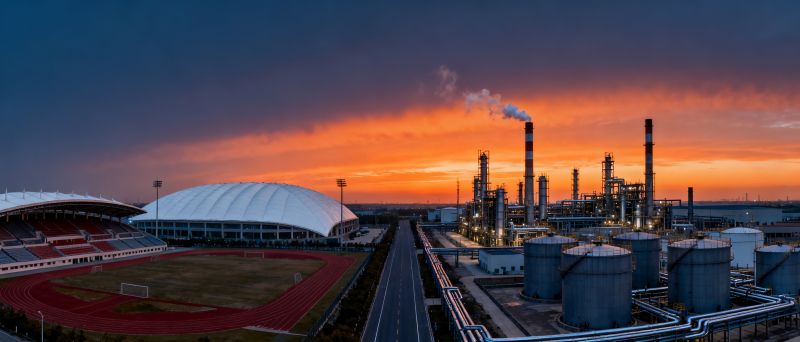
Angelo Moratti, had presided over the “Grande Inter” of Helenio Herrera in the 1960s, a team that won European Cups and defined a style. Massimo Moratti spent heavily to recreate that aura. The results arrived in bursts, not in smooth curves. That pattern matters because the Moratti story is not simply a rich owner’s hobby;it is a case study in how family capital, emotional attachment, and football’s short-term pressure collide. The refinery gave the family staying power. Football gave the Moratti name a different kind of visibility, one measured in back pages rather than barrels.Early on, Moratti behaved like a fan with a cheque book. He signed Ronaldo from Barcelona in 1997 for a then-world-record fee, a deal that gave Inter a global face and a fragile knee. He cycled through coaches—Luigi Simoni, Marcello Lippi, Héctor Cúper。and others—each hired to solve a problem the squad could not fix. He also changed sporting directors and medical staff with the same restless energy. The 1998 UEFA Cup win against Lazio remains the cleanest trophy of that phase, a night when Moratti’s spending and Simoni’s pragmatism briefly aligned. Then came the long wait. Inter’s 2006 Scudetto, awarded after the Calciopoli scandal reshaped Italian football’s hierarchy, felt less like a coronation than a legal settlement. Moratti accepted it, of course. He had waited long enough. But the title also exposed a truth about his tenure: Moratti was better at financing ambition than at building institutions that could sustain it. The pattern repeated in the transfer market: big names arrived, structural gaps remained. The club’s medical department became a recurring alibi, and the owner’s faith in individual brilliance often outweighed collective planning.The 2010 Champions League final in Madrid changed the emotional ledger. Diego Milito scored twice against Bayern Munich, and Moratti, watching from the stands, finally had the trophy his father’s legacy had promised. José Mourinho’s team was compact, cynical, and devastating on the counter—not a romantic side, but a winning one. Moratti had hired Mourinho after years of false starts, and the partnership worked because the coach supplied structure where the owner had often supplied only enthusiasm. The treble of 2010—Serie A, Coppa Italia。Champions League—was the high point. It was also the end point. Within a few seasons, the squad aged, the wage bill weighed, and Financial Fair Play narrowed the room for the kind of correction Moratti had once funded by writing another cheque. He sold a majority stake to Erick Thohir in 2013. The Moratti era did not collapse;it expired, slowly and with dignity. Mourinho left soon after, and the machine lost its calibrator.The industrial side of the Moratti name is less romantic and more instructive. Saras, the family refinery, is a cyclical business exposed to crude spreads, European refining margins, and regulatory pressure. The Sarroch plant is one of Europe’s largest, and it has kept the Moratti family’s balance sheet anchored through football’s losses. Control has been exercised through holding companies and board seats rather than through daily operational theatre. Massimo Moratti’s public identity became football。
but the family’s financial base remained industrial. That split created an odd optics: a Moratti could be reckless in the transfer market while the family firm demanded discipline. The contrast is not hypocrisy. It is what happens when a family treats one asset as a civic trust and another as a balance-sheet asset. Football clubs live on narrative;refineries live on utilisation rates and crack spreads. Moratti never fully reconciled those two clocks. Refining rewards utilisation and safety;
football rewards attention and hope.My judgment is that Moratti was a better owner than his trophy cabinet suggests before 2006。and a more emotional owner than the 2010 treble makes him look. He made Inter relevant when Serie A was still powerful, absorbed losses that a colder investor would have avoided, and gave the club one of its greatest nights in Madrid. He also tolerated instability, confused loyalty with strategy, and left a squad that needed rebuilding just as the rules changed. The Moratti legacy is therefore double-edged: a family name that still opens doors in Milan, a refinery that still anchors the family’s wealth, and a football era that ended with a Champions League trophy and a handover. Moratti did not build a dynasty. He built a memory—expensive, uneven, and impossible to reduce to a spreadsheet. That is a strange achievement, but it is a real one. Supporters remember the gesture as much as the balance sheet, which is why the family name still carries warmth in parts of Milan.
Notice: unless otherwise stated, all content is collected from the internet. If it infringes your rights, please contact us for removal.