Michael Jackson and Jordan: Perfectionism, Spectacle, and the Cost of Global Fame
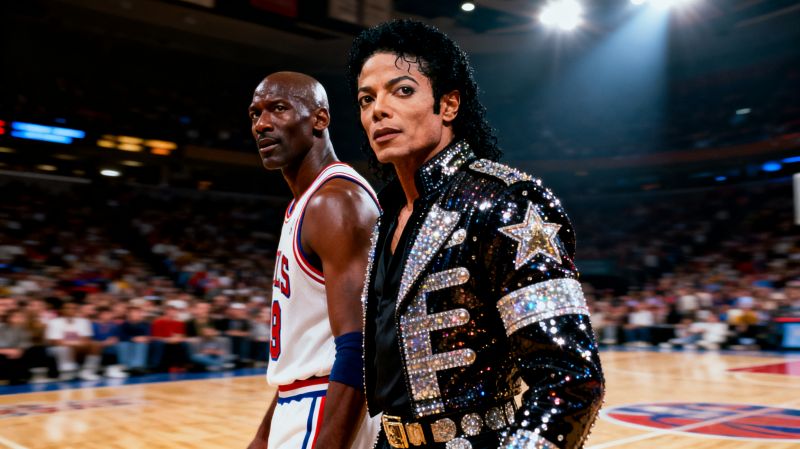
he opening seconds of Michael Jackson's 1992 'Jam' video are almost comically mismatched. Michael Jordan。wearing a loose white shirt and backward cap, bounces a basketball in a dim hallway while Jackson waits near a doorway, coiled and silent. Jordan looks like an athlete who has wandered into a cathedral;Jackson looks like he owns the place. The collaboration remains a rare snapshot of Michael Jackson and Jordan sharing the same frame, and it exposes something useful: both men built careers on repetition, control, and an almost uncomfortable intolerance for ordinary execution. Jordan's cameo is not a performance of equals. It is a meeting of two separate disciplines, each ruled by a star who treated practice as a moral obligation. That shared severity, more than crossover marketing, is what makes the comparison stick.Michael Jackson and Jordan came from different machinery. Jackson was raised inside Motown's ruthless apprenticeship, where a child could be polished into a product before he understood what was being taken from him. Jordan arrived at the NBA with a college pedigree, a corporate smile, and a game that turned isolation into theater. Jackson's stage was a single body under a spotlight;
Jordan's was a five-man geometry with cameras crowding the baseline. Still。listen to the way their peers describe them. Teammates talk about Jordan's practice-court cruelty, the way he turned scrimmages into referendums on manhood. Dancers and engineers talk about Jackson's insistence on a three-second count, a sleeve angle, a breath placed exactly where it belonged. Both were impossible bosses. Both made the impossible look inevitable.The commercial side is where Michael Jackson and Jordan diverge most sharply. Jordan became a brand without surrendering the court, largely because Nike built a narrative around competitiveness that could survive his retirement. Jackson became a brand that eventually swallowed the person, or at least made the person harder to see. 'Thriller' turned him into a global event;the trials, tabloids。and physical transformations turned him into a cautionary tale. Jordan's scandals were contained, negotiated, and expensive. Jackson's were televised as a slow-motion crisis. That asymmetry says less about talent than about the industries surrounding them. Basketball could absorb Jordan's aggression as a feature. Pop stardom demanded Jackson's vulnerability and then punished him for it.Michael Jackson and Jordan both understood that mass audiences respond to precision before they respond to personality. A Jordan fadeaway and a Jackson spin are not mysterious gifts;they are repeated actions refined until the seams disappear. The difference is that Jordan's precision aged into folklore, while Jackson's precision became evidence in a larger argument about his body and his privacy. Watch old footage of either man and the same unnerving focus appears: the tongue out, the shoulders square, the eyes fixed on a target no one else can see. It is not warmth. It is craft. Audiences often mistake that intensity for authenticity。
which may be the most profitable misunderstanding in modern celebrity.The phrase 'Michael Jackson and Jordan' usually signals a lazy list of nineties icons, but the pairing is sharper than nostalgia. It describes two people who turned repetition into global language and then paid different prices for being legible everywhere. Jackson's legacy is now inseparable from the damage;Jordan's is protected by highlight reels and a carefully managed public face. Still, the 'Jam' video remains a strange little document. Jordan dribbles. Jackson waits. Neither man looks relaxed. The camera catches two perfectionists who know they are being watched by history, and neither one is willing to blink first.
Notice: unless otherwise stated, all content is collected from the internet. If it infringes your rights, please contact us for removal.